
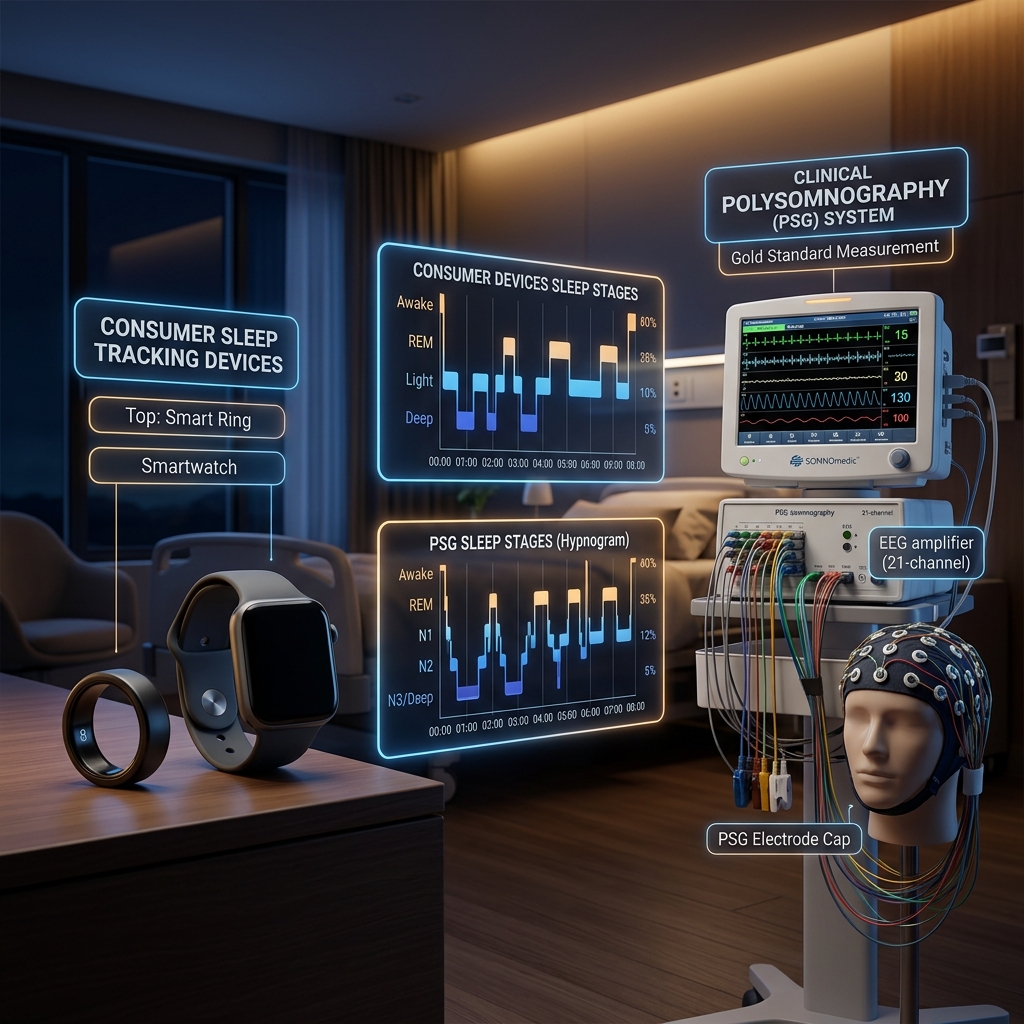
Three different questions
A nightly sleep estimate asks how a device's algorithm interpreted its signals. A screening feature asks whether a pattern merits attention. A clinical assessment asks whether symptoms and appropriate testing support a diagnosis. Treating these as the same question gives a dashboard more authority than it has earned. The AASM's position statement places consumer-generated information within, not in place of, a clinical evaluation. [1]
Do not borrow accuracy from another device
Look for validation of the exact hardware, software version, measurement and population. A study of total sleep time does not establish equal accuracy for every sleep stage. The old article gave numerical error ranges across brands without an identifiable supporting paper; those numbers have been removed. We cannot turn an unverified average into a reliable interpretation of your night.
Screening has changed—but is still not diagnosis
Some consumer features now have specific regulatory authorization. The FDA classifies over-the-counter sleep-apnea risk devices as notification tools, not standalone diagnostic tests or replacements for traditional diagnostic methods. Authorization for that purpose should not be stretched into approval of every sleep or recovery metric on the same device. [2]
A useful example of the boundary
Apple says its sleep-apnea notification feature looks for repeated breathing-disturbance patterns over a 30-day period. It is intended for adults who have not already been diagnosed with sleep apnea. Apple also states that not everyone with sleep apnea receives a notification, and that the feature is not intended to diagnose, treat or manage the condition. An absent alert is therefore not proof that there is no problem. [3]
Bring observations, not a self-diagnosis
A record of your sleep schedule, symptoms and device observations can help frame a conversation with a clinician. Persistent sleep problems should not be dismissed because a score looks good, or treated solely because it looks bad. The AASM recommends interpreting consumer information in the context of a proper evaluation. Do not change prescribed treatment based on a tracker. [1] [3]