Five Grams of Pressure
The first thing you notice is how little the practitioner seems to be doing.
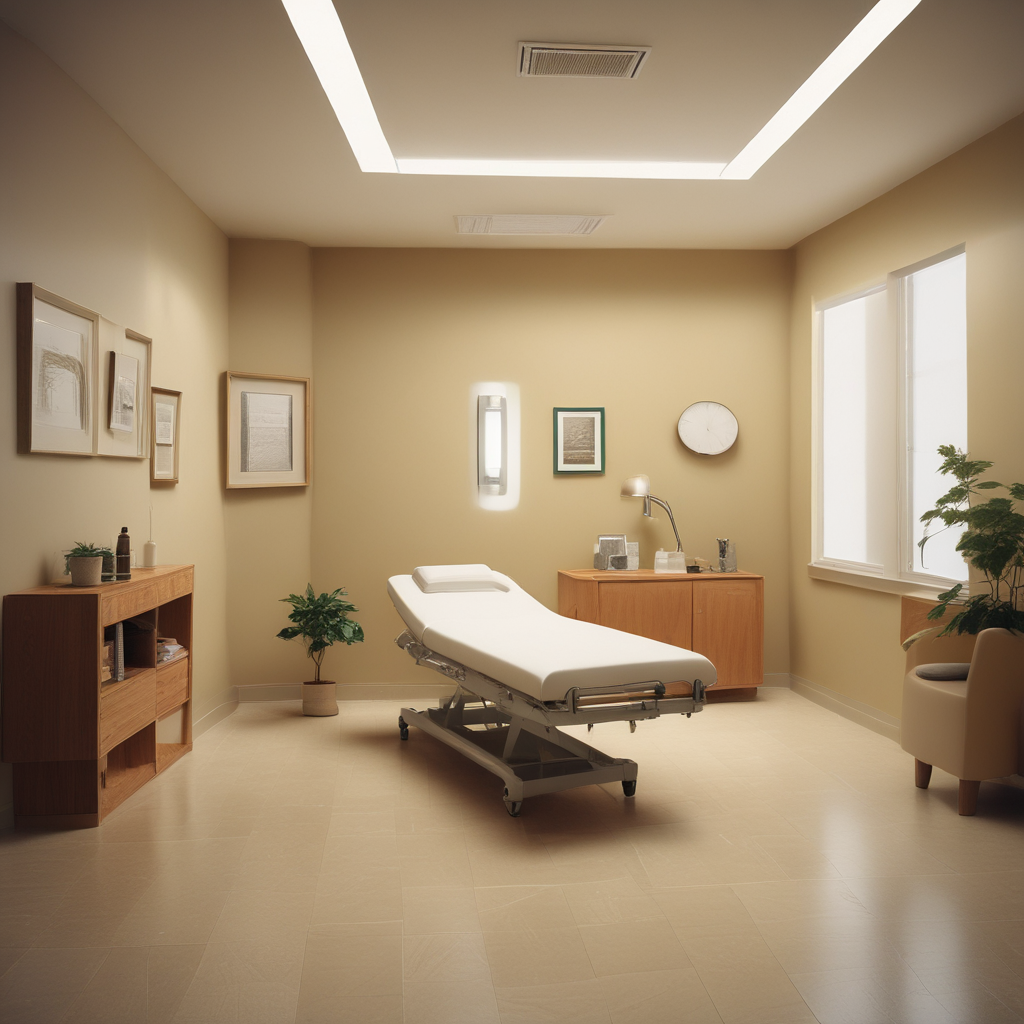
You're lying fully clothed on a treatment table. The therapist places their hands under your head — cradling the occiput, the bone at the base of your skull. They're barely touching you. The pressure is roughly five grams — about the weight of a nickel.
Then they wait.
For ten minutes, nothing visible happens. Their hands don't move. There's no cracking, no manipulation, no deep tissue work. If you glanced through the window, you'd think the therapist had fallen asleep.
But beneath that stillness, practitioners of craniosacral therapy (CST) claim to feel something — a subtle, rhythmic pulsation that they describe as the "craniosacral rhythm." They say this rhythm reflects the flow of cerebrospinal fluid (CSF) around the brain and spinal cord, and that by detecting and correcting restrictions in this rhythm, they can relieve pain, reduce tension, and restore nervous system function.
It sounds implausible. The scientific community has, for decades, largely agreed. But craniosacral therapy refuses to go away — and some of the research is getting harder to ignore.
The Origin Story
Craniosacral therapy traces its lineage to osteopathy. In the early 1900s, an osteopath named William Garner Sutherland proposed that the bones of the skull — long assumed to be fused solid in adults — actually retained a degree of motion. He called this "the primary respiratory mechanism" and believed it was driven by the production and absorption of cerebrospinal fluid.
Sutherland's ideas were largely dismissed during his lifetime. Then, in the 1970s, an osteopathic physician named John Upledger reported observing a rhythmic movement of the dural membranes during a spinal surgery. He spent the next decade developing what he called craniosacral therapy — a gentler, more accessible version of Sutherland's cranial osteopathy.
Upledger's innovation was training non-physicians to practice the technique. This democratized the approach — and infuriated much of the medical establishment.
What the Skeptics Say
The critiques of CST are straightforward:
Inter-rater reliability is poor. When two practitioners independently assess the same patient's craniosacral rhythm, they often disagree on what they're feeling. A 2007 systematic review in Complementary Therapies in Medicine found that inter-examiner reliability was "generally low."
The mechanism is questionable. Modern anatomy confirms that cranial sutures do retain some flexibility into adulthood, but the degree of motion is extremely small — on the order of micrometers. Whether this motion is palpable to human hands is debated.
The cerebrospinal fluid rhythm may not be what practitioners think it is. The rate reported by CST practitioners (6–12 cycles per minute) doesn't consistently match measured CSF flow rates. Some researchers suggest that what practitioners are feeling is their own arterial pulse, respiratory rhythm, or a phenomenon known as the Traube-Hering-Mayer oscillation.
What the Evidence Shows
Despite these criticisms, clinical outcomes research tells a more nuanced story.
A 2019 randomized controlled trial published in BMC Musculoskeletal Disorders found that CST significantly reduced chronic neck pain compared to sham therapy. Improvements were maintained at the 3-month follow-up.
A 2016 RCT in Cephalalgia found that CST produced significant reductions in migraine days and pain intensity compared to a waitlist control. The improvements lasted six months.
A 2020 systematic review in BMC Complementary Medicine and Therapies analyzed nine RCTs and concluded that CST showed "promising evidence" for pain conditions, though methodological quality varied.
The pattern is consistent: CST often outperforms waitlist controls, sometimes outperforms sham treatments, and rarely causes harm. The effect sizes are modest but real.
The Nervous System Angle
The most interesting theoretical development in CST isn't about cranial bones or CSF — it's about the nervous system.
Several researchers have proposed that CST's primary mechanism of action isn't biomechanical at all. Instead, the sustained, gentle touch may activate parasympathetic pathways — particularly the ventral vagal complex described by polyvagal theory.
The logic is compelling: five grams of pressure, held steadily over minutes, in a quiet, safe environment, delivered by an attentive practitioner. This isn't a manipulation — it's a co-regulation. The practitioner's calm, attuned presence may help downregulate the patient's sympathetic nervous system, shifting them from a state of defense to a state of rest and repair.
This would explain several observations:
- Why CST produces systemic effects (pain reduction, improved sleep, reduced anxiety) that are hard to explain through local tissue manipulation alone
- Why the therapeutic relationship matters so much in CST outcomes
- Why the technique seems particularly effective for stress-related conditions
- Why inter-rater reliability for the "craniosacral rhythm" is poor — if the rhythm isn't the mechanism, disagreements about it are less important
Who Seeks It Out
Craniosacral therapy attracts a specific population: people who have tried everything else.
Chronic pain patients. Migraine sufferers. People with TMJ disorders. Trauma survivors who find traditional bodywork too intense. Parents of infants with colic or feeding difficulties (pediatric CST is a growing, if controversial, subfield).
What these populations share is a nervous system that tends to be stuck — either revved up (hypervigilant, pain-sensitized) or shut down (dissociated, exhausted). CST offers something unusual in the bodywork world: a treatment that is profoundly gentle, that doesn't require undressing, and that meets the nervous system where it is rather than overwhelming it with stimulus.
For some people, this is exactly what's needed. For others, the subtlety feels like nothing is happening.
The Honest Assessment
Craniosacral therapy sits in an uncomfortable space. Its theoretical foundations are contested. Its mechanism of action is unclear. Its practitioners sometimes make claims that outrun the evidence.
And yet. People get better. Pain decreases. Nervous systems settle. Sleep improves. The effects are modest, but they're there — and they appear repeatedly in controlled research.
The most likely explanation isn't mystical. It's that sustained, attentive, gentle human touch — delivered in a safe environment by someone who is genuinely present — has measurable neurophysiological effects. Whether we need a theory about cerebrospinal fluid to explain those effects is a separate question.
Sometimes the quietest therapy in the room is doing the most important thing: teaching the nervous system that it's safe to let go.
Sources: Jäkel & von Hauenschild, "Therapeutic Effects of Cranial Osteopathic Manipulative Medicine," JACM, 2011. Haller et al., "Craniosacral Therapy for Chronic Pain," BMC Musculoskeletal Disorders, 2019. Arnadottir & Sigurdardottir, "Craniosacral therapy and migraine," Cephalalgia, 2016. Upledger, "CranioSacral Therapy," Eastland Press, 1983.
Watch: What Is Craniosacral Therapy?
A clear, clinical overview of craniosacral therapy — how practitioners detect craniosacral rhythm, the gentle pressure techniques used, and the conditions it's most commonly applied to, including headaches, TMJ, and trauma recovery.