The Shake That Changes Everything
If you've ever watched a nature documentary, you've probably seen it without realizing what you were looking at. A gazelle runs from a lion. The lion gives up. And then the gazelle does something strange — it stands in place and trembles. Its whole body shakes, sometimes violently, for thirty or forty seconds. Then it walks away and goes back to eating grass like nothing happened.
Dr. Peter Levine watched that clip in the 1970s and asked a question that would take him decades to answer: What if the shake is the point?
What if the trembling isn't a side effect of the stress response — what if it's the completion of it? What if the gazelle's body needs to physically discharge the survival energy before it can return to baseline? And what if humans, who suppress that discharge because we've been taught to "hold it together," end up with nervous systems that keep predicting threat long after the danger has passed?
Somatic Experiencing was born from that question.
The Freeze Response Nobody Talks About
Most people know about fight or flight. Your boss yells at you, and your body wants to either punch the wall or sprint out of the building. That's the sympathetic nervous system doing its job.
What fewer people know is that there's a third option. When fighting is futile and fleeing is impossible, your nervous system has a backup plan: freeze.
The freeze response is ancient — older than mammals, shared with reptiles. It's the "play dead" strategy. Your heart rate drops. Your muscles lock. You go numb. In extreme cases, people describe it as "leaving their body" or "watching from above."
Here's the problem: the sympathetic charge — all that energy your body mobilized to fight or flee — doesn't go away when you freeze. It stays active in the nervous system's predictive loops. Think of it like slamming the gas pedal and the brake at the same time. The engine is revving, but you're not moving.
This is what Levine believes happens in trauma. Not all trauma, not always, but often enough that it matters. The body mobilizes a massive survival response, but circumstances prevent that response from completing. The nervous system's predictions become stuck on "danger." And those predictions persist for years, sometimes decades, manifesting as chronic tension, unexplained pain, anxiety, digestive problems, and a constant feeling of being on edge — or alternatively, numb, disconnected, and shut down.
Recent computational neuroscience research (Kotler, Friston et al., 2026) frames this as a collapse of metastability — the brain's ability to fluidly switch among network states. The "stored energy" Levine describes may be more precisely understood as rigid threat predictions that the brain keeps confirming through circular inference: it expects danger, senses arousal, and interprets that arousal as proof that danger persists.
What Happens in a Session
If you're expecting something dramatic, you'll be disappointed. Somatic Experiencing might be the quietest therapy you'll ever try.
There is no couch. There is usually no request to "tell me about your childhood." You don't have to relive the worst moments of your life. In fact, SE practitioners deliberately avoid overwhelm — they call it "titration," borrowing a chemistry term for adding small amounts of a reactive substance so the reaction stays manageable.
A typical session looks something like this:
A practitioner asks you to notice what you feel in your body. Not what you think. Not what you believe. What you feel. Where is there tension? Warmth? Numbness? Tingling? Heaviness?
Then they might ask you to stay with that sensation. Just notice it. Not fix it, not analyze it, not push through it. Just notice.
What often happens next is subtle but powerful: the sensation changes. Tension shifts. Heat moves. A limb twitches. The jaw loosens. Sometimes there's trembling — not unlike the gazelle — as the body finally releases energy it's been holding.
This is the core of SE: creating a safe container for the body to complete interrupted survival responses. The practitioner isn't doing the healing — your nervous system is. They're just making sure the process doesn't overwhelm you.
What the Evidence Says
A 2017 randomized controlled trial published in the Journal of Traumatic Stress by Danny Brom and colleagues at the Herzog Hospital in Jerusalem compared SE to a waitlist control group for people with PTSD.
The results: participants who received 15 sessions of SE showed significant reductions in PTSD symptoms. More importantly, those improvements held at the 15-month follow-up. People didn't just feel better temporarily — the changes stuck.
A 2021 review in the European Journal of Psychotraumatology found positive outcomes across multiple studies, though the authors noted that larger, more rigorous trials are still needed. The evidence base is growing, but it's honest to say that SE doesn't yet have the volume of research behind it that CBT or EMDR do.
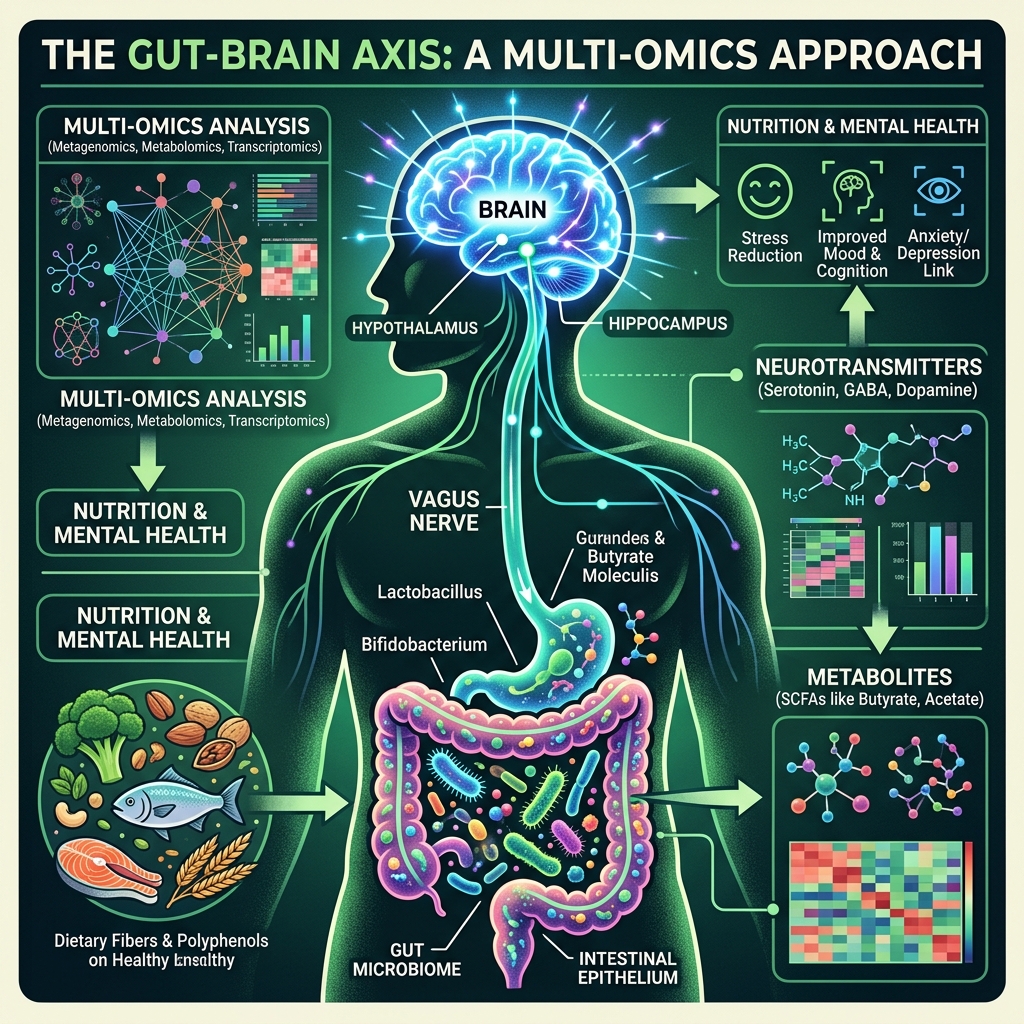
What it does have is a strong clinical track record and a theoretical framework that increasingly aligns with what neuroscience is discovering about the autonomic nervous system. Stephen Porges' polyvagal theory — which maps how the vagus nerve shapes our responses to safety and threat — provides a neurobiological context for what SE practitioners observe clinically.
Who This Is For
SE tends to help people who:
- Have done talk therapy and found it helpful for understanding their patterns, but less helpful for actually changing how their body feels
- Experience chronic physical tension, pain, or health issues that don't have a clear medical explanation
- Feel "stuck" — either chronically activated (anxious, hypervigilant, can't relax) or chronically shut down (numb, disconnected, low energy)
- Have experienced trauma — whether a single acute event or the accumulation of chronic stress over years
- Want to work with their body, not just their thoughts
It's not a replacement for other therapies. Many people do SE alongside talk therapy, medication, or other modalities. It's a tool, not a religion.
Finding a Practitioner
SE practitioners complete a three-year training program through the Somatic Experiencing International (SEI) organization. Look for someone with the "SEP" credential (Somatic Experiencing Practitioner). Many therapists, bodyworkers, and coaches add SE training to an existing practice.
A word of caution: "somatic" has become a buzzword. Not everyone using the term is SE-trained. Ask about credentials, ask about training hours, and trust your gut. If a practitioner pushes you too fast, doesn't create a sense of safety, or seems more interested in dramatic catharsis than gentle titration — find someone else.
The body has its own intelligence. SE is built on the radical, simple premise that your nervous system already knows how to heal. It just needs a safe enough environment to do it.
Watch: Peter Levine on Trauma and Somatic Experiencing
Dr. Peter Levine — the creator of Somatic Experiencing — explains how trauma gets trapped in the body's nervous system and how SE helps the body complete its natural recovery process. This is the foundational framework behind every concept discussed in the article above.
Sources: Brom et al., "Somatic Experiencing for Posttraumatic Stress Disorder: A Randomized Controlled Outcome Study," Journal of Traumatic Stress, 2017. Kuhfuß et al., "Somatic Experiencing — effectiveness and key factors of a body-oriented trauma therapy: a scoping literature review," European Journal of Psychotraumatology, 2021. Kotler, Mannino, Fox & Friston, "The body does not keep the score," Frontiers in Systems Neuroscience, 2026.