Key Findings
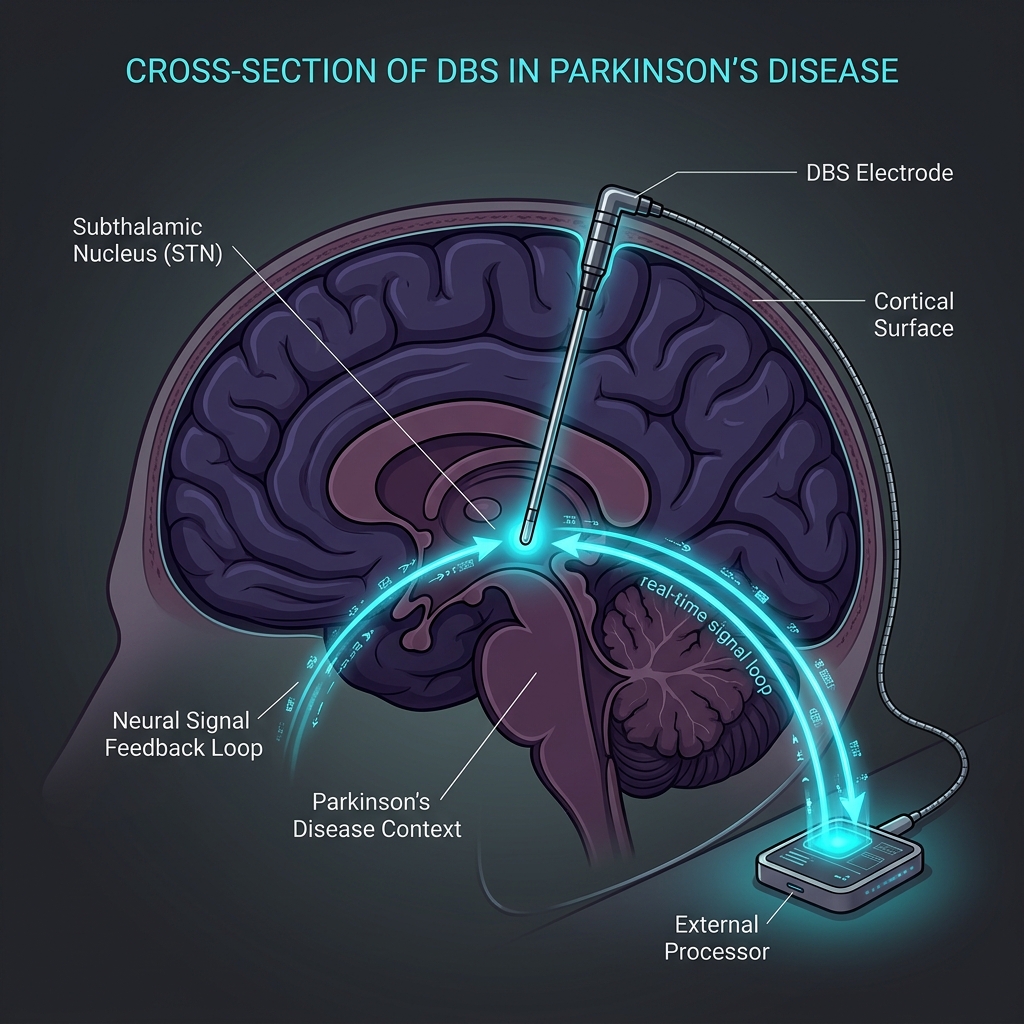
Deep brain stimulation has demonstrated its therapeutic potential in modulating pathological oscillations associated with Parkinsons disease and epilepsy. However, its efficacy in treating disrupted theta-gamma phase-amplitude coupling seen in memory-related disorders, such as Alzheimers disease, remains poorly understood. While recent studies have targeted the entorhinal-hippocampal circuit, results remain inconsistent. This discrepancy stems from a lack of mechanistic understanding regarding how stimulation protocols affect this circuit. In this work, we present a reduced multicompartment model of the hippocampal CA1 area that reproduces theta-nested gamma oscillations characteristic of healthy neural activity during memory performance. The model comprises pyramidal, basket and OLM cells with simplified morphologies. We also incorporated CA3-to-CA1 axonal projections, providing a foundational framework for studying how stimulation-induced recruitment of afferent pathways modulates CA1 dynamics. By balancing computational efficiency with anatomical accuracy, our model enables systematic investigation of the effects of electrode placement and orientation, as well as stimulation amplitude and frequency on CA1 neural activity. We demonstrate that the excitatory response in CA1 is primarily driven by the recruitment of Schaffer collateral projections. Overall, this work provides a computationally efficient template for exploring diverse stimulation configurations and could be expanded for developing neuromodulatory strategies to restore physiological network dynamics.
Author summaryDeep brain stimulation has shown success in treating Parkinsons disease by suppressing abnormal neural activity responsible for movement disorders. However, when applied to memory-related pathologies, such as Alzheimers disease, the therapeutic outcomes remain unpredictable, ranging from cognitive improvement to impairment. This discrepancy highlights a critical gap in our understanding of how stimulation protocols interact with neural dynamics of the targeted circuits. To address this, we developed a computationally efficient model of the hippocampus, which is involved in memory processes, in order to understand how deep brain stimulation might influence its activity. Our model maintains enough biological accuracy to capture essential memory-related neural activity while remaining lightweight enough for rapid execution and systematic exploration of different protocols. This computational efficiency allowed us to conduct systematic investigations of several stimulation configurations to study their effects on hippocampal dynamics. Overall, this model could provide a useful and computationally cost-efficient tool for exploring the mechanisms of deep brain stimulation and help optimize stimulation protocols aimed at alleviating memory disorders.
Why This Matters for Body-Mind Practice
[Draft — editorial context needed]