The Brain Pacemaker Does More Than Pace
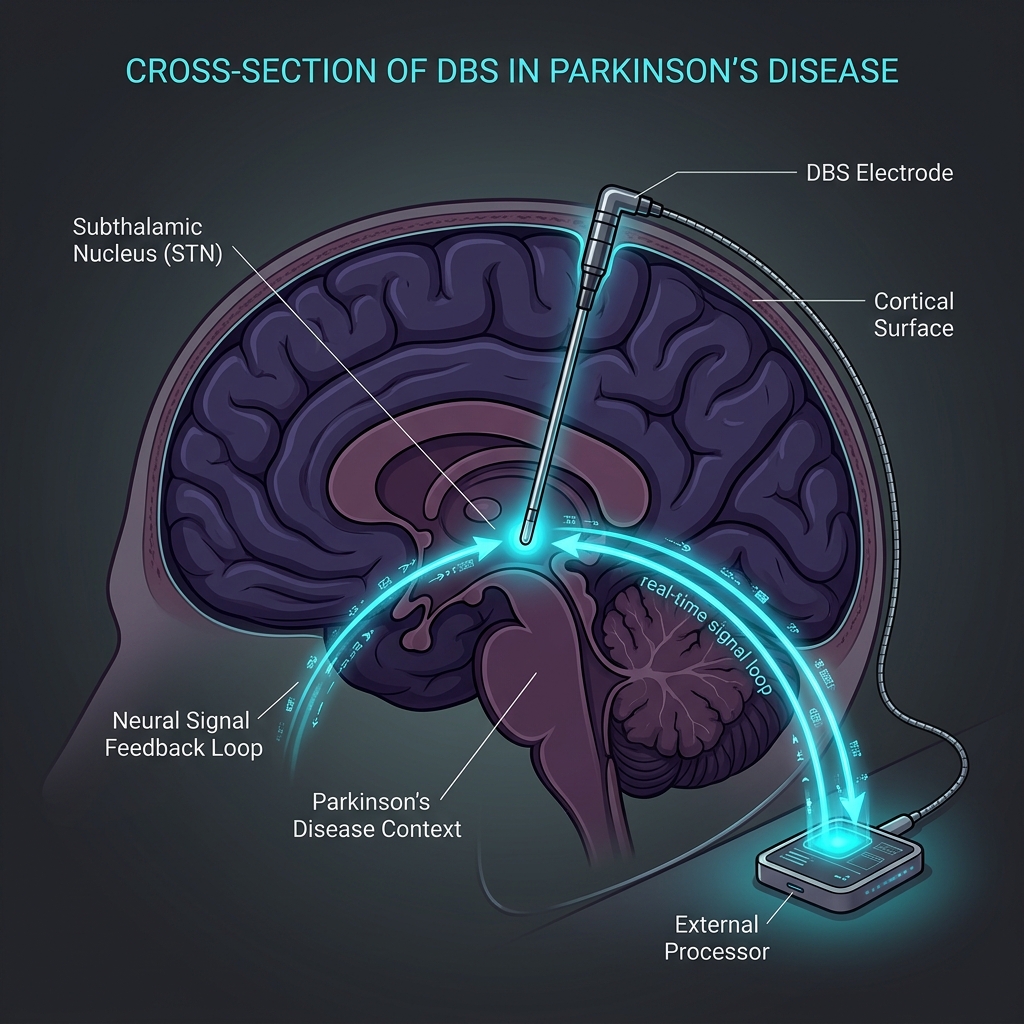
Deep brain stimulation has been used for decades — primarily for Parkinson's disease tremors, but increasingly for severe, treatment-resistant depression. The assumption was always that DBS works by modulating electrical activity in targeted brain regions. Turn on the current, symptoms improve. Turn it off, they return.
That assumption just got overturned.
A study published June 1, 2026 in Nature Neuroscience provides the first direct evidence that DBS physically remodels white matter pathways — the brain's structural wiring — in patients with treatment-resistant depression.
What the Study Found
Researchers used advanced diffusion MRI to track white matter changes in patients receiving chronic DBS therapy targeted at the subcallosal cingulate (SCC), a region implicated in mood regulation.
Key findings:
- White matter integrity increased in mood-regulating circuits after sustained DBS treatment
- The structural changes correlated with clinical improvement — patients with greater white matter remodeling showed better depression outcomes
- Changes were not present at baseline and developed over months of continuous stimulation
- The rewiring affected multiple downstream circuits, not just the stimulated region
This means DBS isn't just overriding a faulty signal. It's physically repairing the infrastructure that carries emotional and regulatory signals through the brain.
Why This Changes the Conversation
Neuroplasticity — the brain's ability to rewire itself — is well established in learning, recovery from stroke, and response to therapy. But structural plasticity in response to an implanted electrical device is a different category entirely.
The implications extend beyond depression:
- OCD and PTSD: If DBS can rebuild circuits in mood disorders, similar mechanisms may apply to anxiety and trauma circuits
- Chronic pain: DBS for intractable pain syndromes may produce lasting structural changes, not just temporary relief
- Neurodegenerative protection: If stimulation can promote white matter growth, it might theoretically slow degeneration in vulnerable pathways
The Bigger Picture for Neuromodulation
This study validates something the neuromodulation field has long suspected but couldn't prove: that sustained electrical stimulation has biological effects that outlast the stimulation itself.
It also raises the stakes for non-invasive neuromodulation devices — the vagus nerve stimulators, tDCS units, and neurofeedback systems we review regularly. If even non-invasive devices produce a fraction of the structural changes seen with DBS, the long-term benefits may be far greater than acute symptom relief suggests.
The evidence is moving in one direction: the brain is more structurally responsive to electrical input than anyone thought a decade ago.