The Study (In Plain English)
In 2018, neuroscientist Justin Feinstein at the Laureate Institute for Brain Research published the largest clinical study on floatation therapy ever conducted. He put 50 participants — many with clinical anxiety and depression — into float tanks and measured what happened.
The main finding: A single one-hour float session produced a significant reduction in anxiety, stress, muscle tension, and pain — and a significant increase in serenity and relaxation. The effects were strongest in the most anxious participants.
What Is Floatation REST?
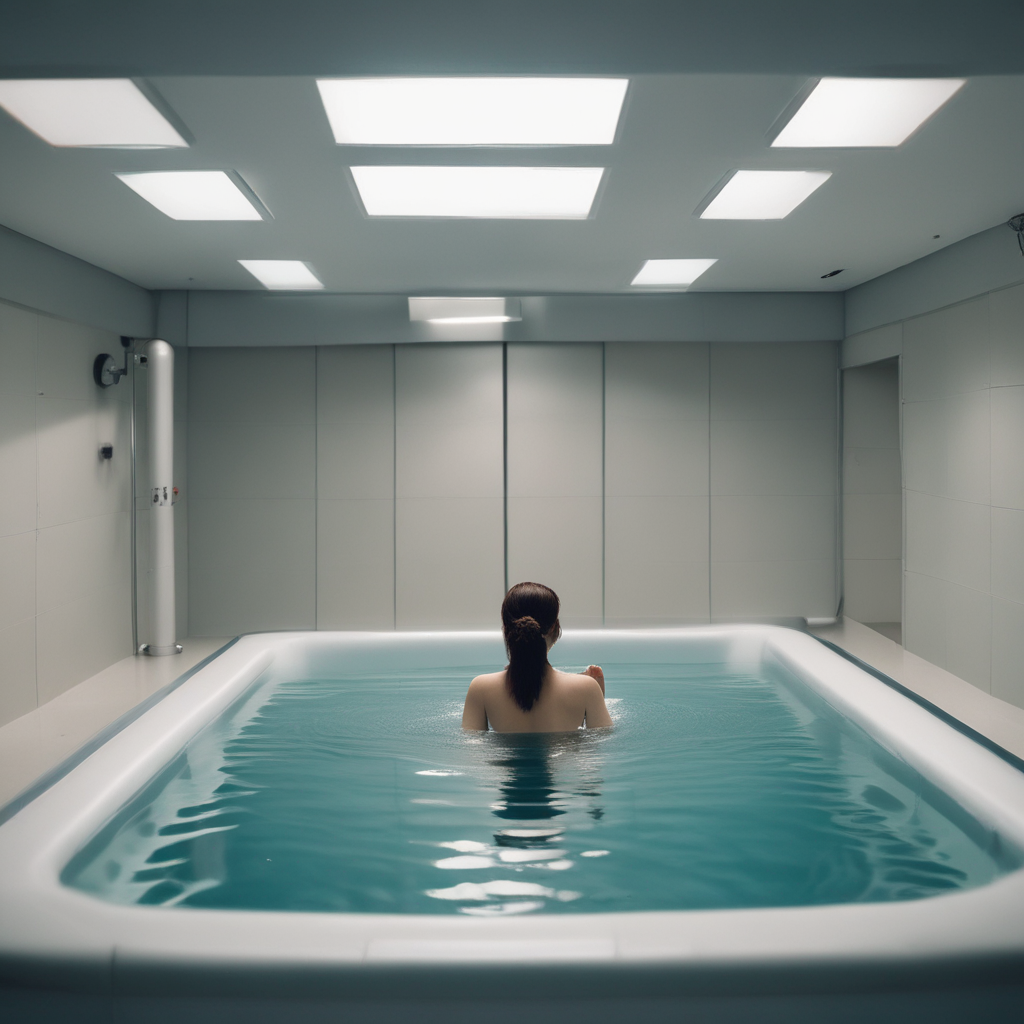
REST stands for Restricted Environmental Stimulation Therapy. The setup is simple:
- A light-proof, sound-proof tank or pod
- 10 inches of water heated to skin temperature (93.5°F / 34.1°C)
- 800-1,000 pounds of dissolved Epsom salt, making the water dense enough that you float effortlessly on the surface
- Sessions typically last 60-90 minutes
The result is an environment of near-total sensory deprivation. No light, no sound, no gravity, no temperature differential on your skin. Your brain's external inputs drop to as close to zero as possible while remaining conscious.
Why Removing Stimulation Matters
Your nervous system processes an estimated 11 million bits of sensory information per second. Even at rest, your brain is constantly monitoring temperature, pressure, sound, light, proprioception (body position), and interoception (internal organ signals).
Floatation removes most of these inputs simultaneously. What remains is an unusual state: consciousness without external stimulus. The brain, freed from its normal workload of processing the outside world, turns inward.
Feinstein's research showed what this looks like neurologically:
Interoceptive Enhancement
Float sessions dramatically increased participants' awareness of internal body signals — heartbeat, breathing, muscle tension. This is called interoceptive sensitivity, and it's significant because:
- Low interoception is linked to anxiety, depression, eating disorders, and trauma
- High interoception is associated with better emotional regulation and body awareness
- Many therapeutic approaches (Somatic Experiencing, mindfulness-based therapies) aim to improve interoception — floating appears to do it rapidly
Anxiolytic Effect
The anxiety reduction was both statistically significant and clinically meaningful. Participants with clinical anxiety (GAD, social anxiety, PTSD, panic disorder) showed the largest improvements — their anxiety dropped by roughly 25% after a single session.
Feinstein's team hypothesized that this works through the same mechanism as interoceptive training: by removing external stimulation, the float tank forces the brain to attend to internal signals. Anxious brains are typically externally focused (scanning for threats). Floating redirects attention inward, toward the body — a form of enforced mindfulness.
The Evidence Base Beyond Feinstein
While Feinstein's study is the most rigorous, float research has been accumulating since the 1950s:
Kjellgren et al. (2014) — 12 sessions of floating over 7 weeks reduced stress, depression, anxiety, and pain while improving sleep quality and optimism in 65 participants.
Bood et al. (2006) — 33 participants with stress-related muscle pain received 12 float sessions over 6 weeks. Pain intensity decreased significantly, and the benefits persisted at a 4-month follow-up.
Jonsson and Kjellgren (2016) — Qualitative study found that experienced floaters reported altered states of consciousness, enhanced creativity, and insights about personal problems.
Flux et al. (2022) — A systematic review of 13 RCTs found moderate evidence supporting floatation REST for stress, anxiety, and pain reduction, with the caveat that most studies are small and methodological quality varies.
The Caveats
Sample sizes remain small. Even Feinstein's landmark study had only 50 participants. The field needs larger, multi-site trials.
Blinding is essentially impossible. You know if you're floating or not. Some studies use a comparison condition (a "relaxation room" or supine rest), but these are imperfect controls.
Dose-response is unclear. How often do you need to float? How long do effects last? A few studies suggest cumulative benefits, but the optimal protocol hasn't been established.
Not for everyone. People with claustrophobia, active psychosis, or certain skin conditions may not tolerate or benefit from floating. Some people simply find the experience uncomfortable rather than relaxing.
The Honest Take
Floatation REST is one of the more interesting low-risk interventions in the nervous system regulation space. The anxiolytic effects are consistent across studies, the mechanism (enhanced interoception + reduced sensory processing load) is neurologically plausible, and the side effects are essentially zero.
It's not a cure for anxiety or chronic pain. But for a modality that involves lying in salt water and doing literally nothing, the evidence is surprisingly robust.
The most important insight from the float research may not be about the tank itself — it's about what happens when you finally stop taking in information. In a world of perpetual stimulation, the therapeutic value of silence and stillness may be greater than we've been willing to admit.
Sources: Feinstein et al., "Examining the Short-Term Anxiolytic and Antidepressant Effect of Floatation-REST," PLoS ONE, 2018. Kjellgren et al., "Beneficial Effects of Treatment with Sensory Isolation," BMC Complementary and Alternative Medicine, 2014. Flux et al., "Floatation-REST: A Systematic Review," Psychology of Consciousness, 2022.