Key Findings
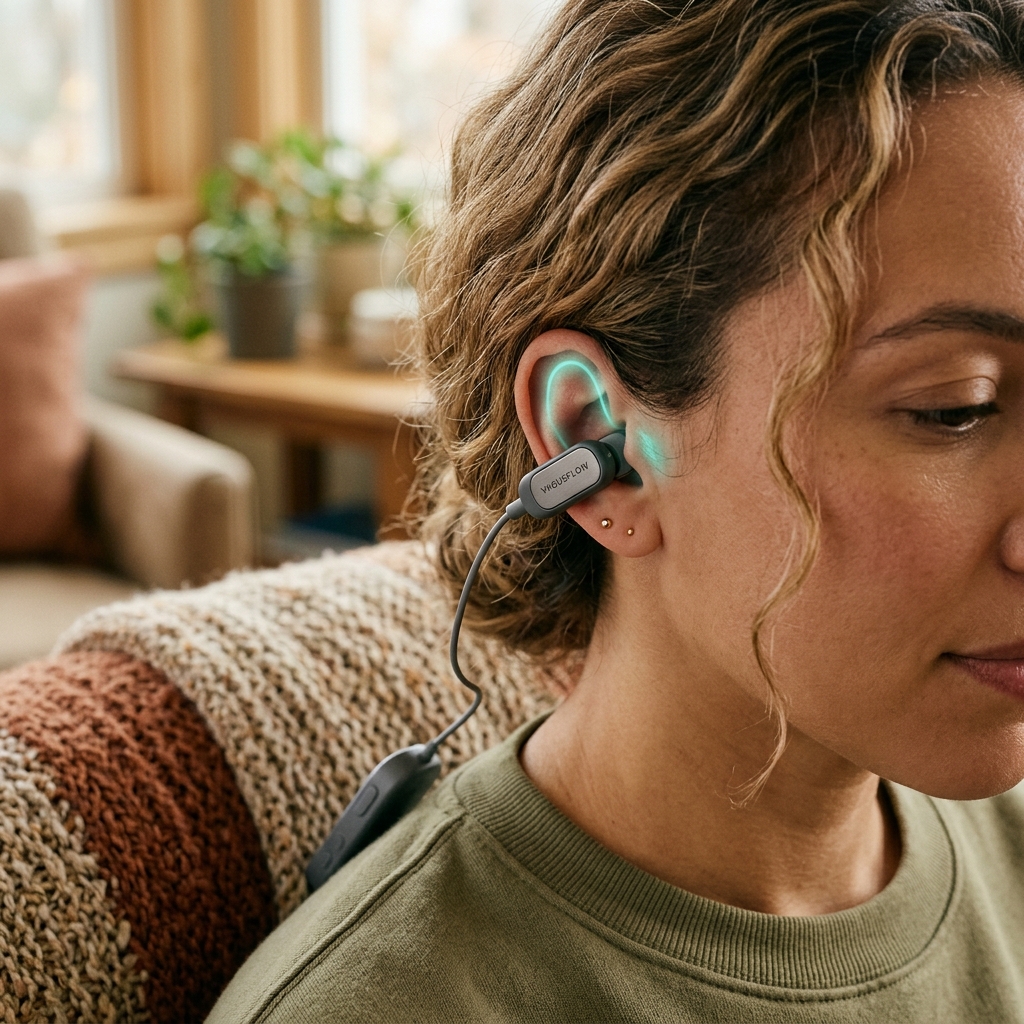
A feasibility and preliminary efficacy study published in June 2026 investigated home-based transcutaneous auricular vagus nerve stimulation (taVNS) as a self-administered treatment for generalized anxiety disorder (GAD). Thirty-eight participants diagnosed with moderate-to-severe GAD (Hamilton Anxiety Rating Scale ≥ 17) completed an 8-week protocol of daily 30-minute taVNS sessions targeting the cymba conchae of the left ear at 25 Hz, 250 μs pulse width.
Clinician-rated anxiety severity decreased by a mean of 38% on the HAM-A at 8 weeks (p < 0.001), with 47% of participants achieving clinical response (≥50% HAM-A reduction). Heart rate variability monitoring via continuous wrist-worn photoplethysmography revealed significant increases in RMSSD (+8.2 ms, p = 0.003) and high-frequency power (+18%, p = 0.01), indicating enhanced cardiac vagal tone.
Adherence was notably high at 89%, with participants reporting the device as comfortable and easy to integrate into daily routines. Common side effects were limited to mild tingling at the electrode site (68%) and transient ear warmth (23%). No serious adverse events were reported.
Why This Matters for Body-Mind Practice
Home-based taVNS represents a paradigm shift in vagus nerve interventions — moving from clinical-only implanted devices to accessible, self-administered daily practices. The simultaneous improvements in both anxiety symptoms and objective HRV metrics validate what body-mind practitioners have long observed: that autonomic tone and psychological state are bidirectionally coupled. The device's ease of integration suggests it could serve as a technological complement to breathwork, meditation, and other vagal toning practices for individuals with clinical anxiety.
Source
- Home-based taVNS for generalized anxiety disorder. — Brain Stimulation