Key Findings
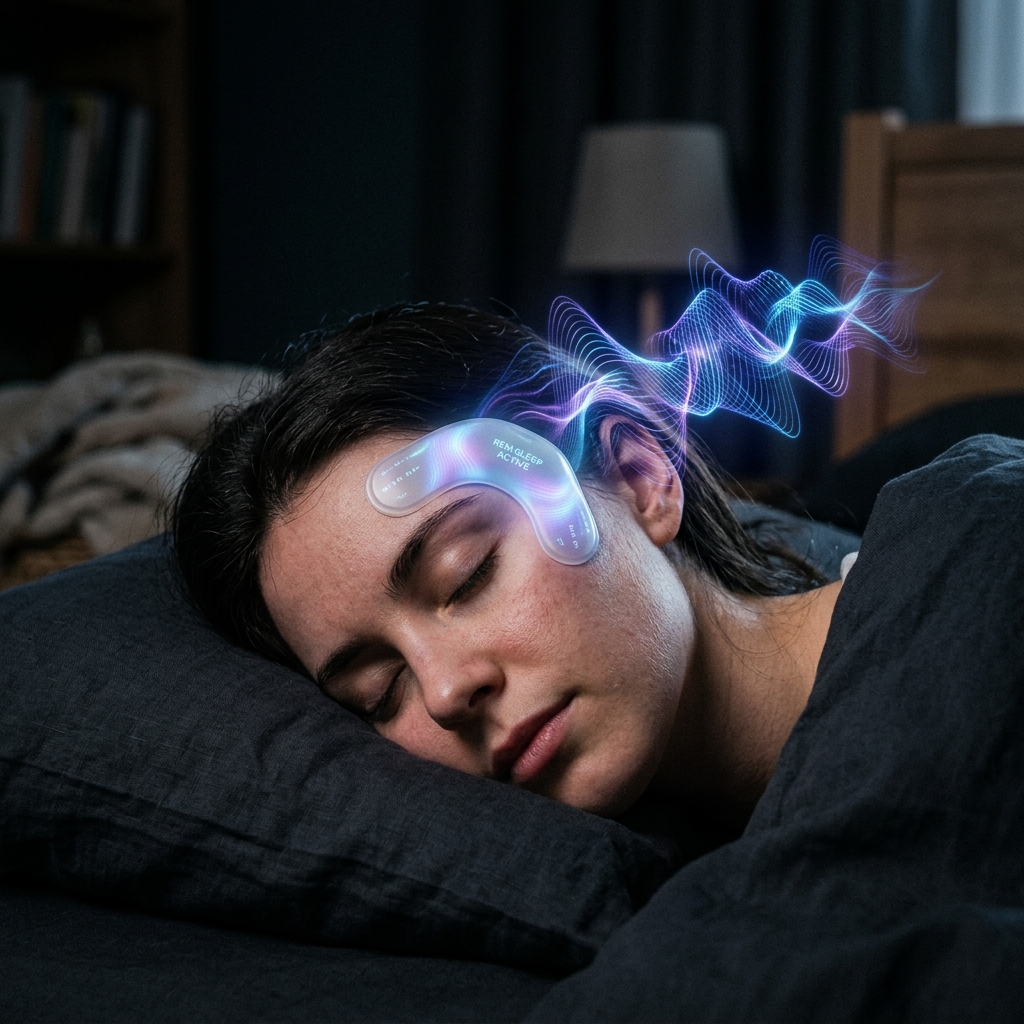
Researchers at the University of Texas at Austin have developed NEUSLeeP — a wearable patch combining transcranial focused ultrasound stimulation with integrated EEG electrodes — capable of modulating sleep architecture without pharmaceutical intervention. Published in Nature Communications in August 2026, the study demonstrated that the device significantly altered sleep onset dynamics in a controlled crossover trial of 52 healthy adults with self-reported sleep difficulties.
Participants wearing the active NEUSLeeP device reached REM sleep 43 minutes faster than sham controls (mean REM latency: 68 ± 12 min vs 111 ± 18 min, p < 0.001) and experienced 16 additional minutes of total REM duration per night. The ultrasound stimulation targeted the pontine tegmentum — a brainstem region critical for REM generation — using parameters calibrated to individual skull thickness via a brief imaging session.
Critically, the device operated in closed-loop mode: onboard EEG detected real-time sleep stage transitions, and ultrasound pulses were delivered only during the NREM-to-REM transition window. No participants reported adverse effects beyond mild scalp warmth, and next-day cognitive testing showed improvements in procedural memory consolidation consistent with enhanced REM function.
Why This Matters for Body-Mind Practice
Non-invasive, drug-free sleep enhancement has been a persistent goal of integrative neuroscience. NEUSLeeP represents a meaningful step toward precision sleep modulation — adjusting specific sleep stages rather than bluntly sedating the nervous system. For body-mind practitioners, this technology could complement existing sleep hygiene protocols by directly addressing REM deficiency, which is implicated in emotional processing, trauma integration, and autonomic nervous system recovery during sleep.
Source
- NEUSLeeP: Wearable ultrasound patch accelerates REM sleep onset. — Nature Communications