Overview
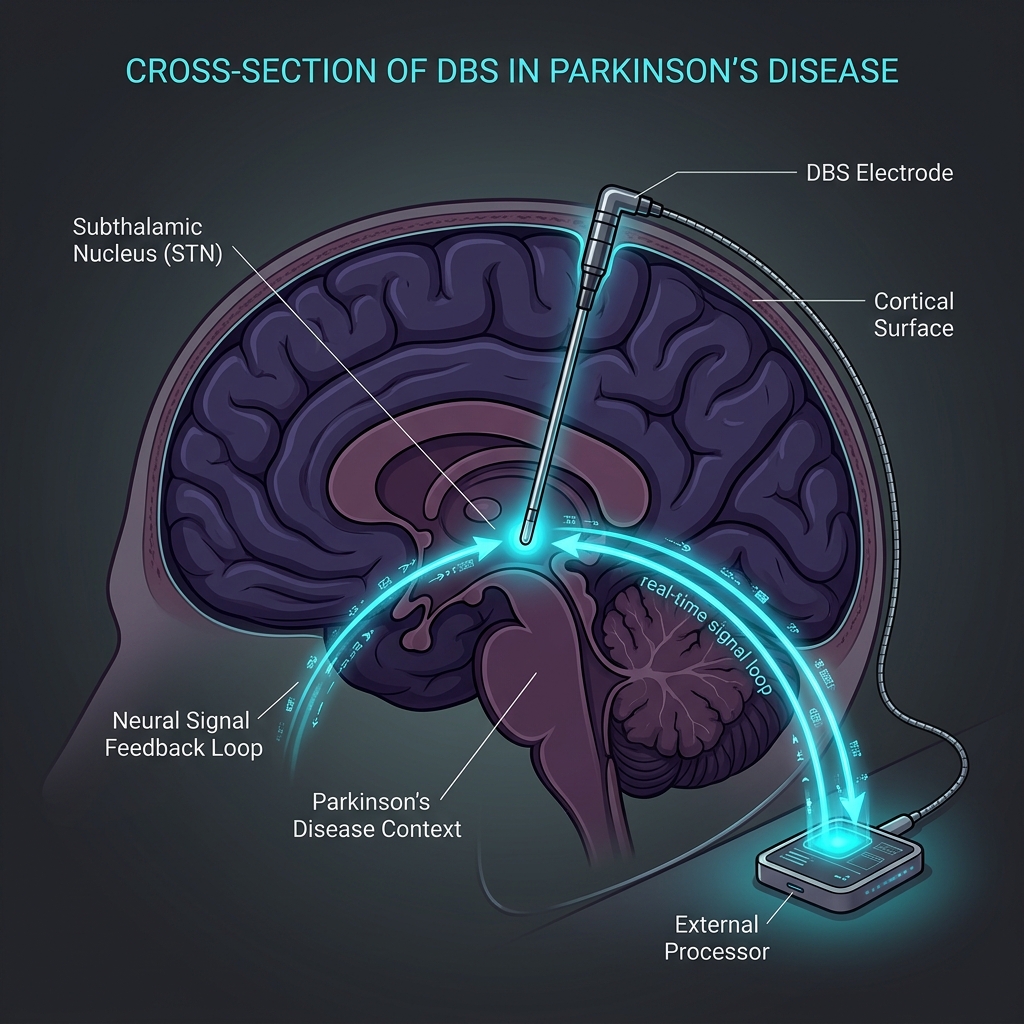
Researchers have developed a novel closed-loop deep brain stimulation (DBS) strategy that uses a proportional-integral (PI) controller to automatically adjust stimulation parameters based on real-time neural signals. This represents a significant advance over conventional open-loop DBS, which delivers constant stimulation regardless of the patient's current state.
Key Findings
The PI controller-based approach demonstrated superior symptom control in computational models of Parkinson's disease, reducing both over-stimulation and under-stimulation compared to fixed-parameter approaches. The system uses beta-band neural oscillations as biomarkers to guide stimulation intensity.
Clinical Significance
Current DBS systems require frequent manual programming adjustments by clinicians. A truly adaptive system could reduce clinic visits, minimize stimulation side effects, and provide more consistent symptom relief throughout the day as the patient's state changes with medication cycles, activity, and sleep.