The Science of Light and Mental Health
The timing, intensity, and spectrum of light exposure profoundly influence circadian rhythms, which in turn regulate mood, cognition, and stress resilience. This isn't just about getting enough light — it's about getting the right light at the right time.
Your Master Clock
Deep within the brain's hypothalamus sits the suprachiasmatic nucleus (SCN) — a tiny cluster of roughly 20,000 neurons that serves as the body's master clock. The SCN coordinates circadian rhythms across every organ system, from hormone release and body temperature to immune function and gene expression.
The SCN receives direct input from specialized photoreceptors in the retina called intrinsically photosensitive retinal ganglion cells (ipRGCs). These cells are particularly sensitive to short-wavelength blue light (~480 nm) and send timing signals to the SCN via the retinohypothalamic tract. Morning bright light exposure (>10,000 lux) within 30–60 minutes of waking synchronizes the SCN, enhancing serotonin production and suppressing melatonin at the appropriate time.
How Light Affects Mood and Cognition
Research published in The Lancet Psychiatry (2018) involving over 91,000 participants found that disrupted circadian rhythms — often caused by irregular light exposure — were associated with increased risk of major depressive disorder, bipolar disorder, and lower subjective well-being. The mechanism involves several pathways:
- Serotonin production: Bright morning light stimulates serotonergic neurons in the dorsal raphe nucleus, directly influencing mood regulation.
- Cortisol awakening response (CAR): Properly timed light exposure sharpens the cortisol peak that occurs 20–45 minutes after waking, improving alertness and stress resilience throughout the day.
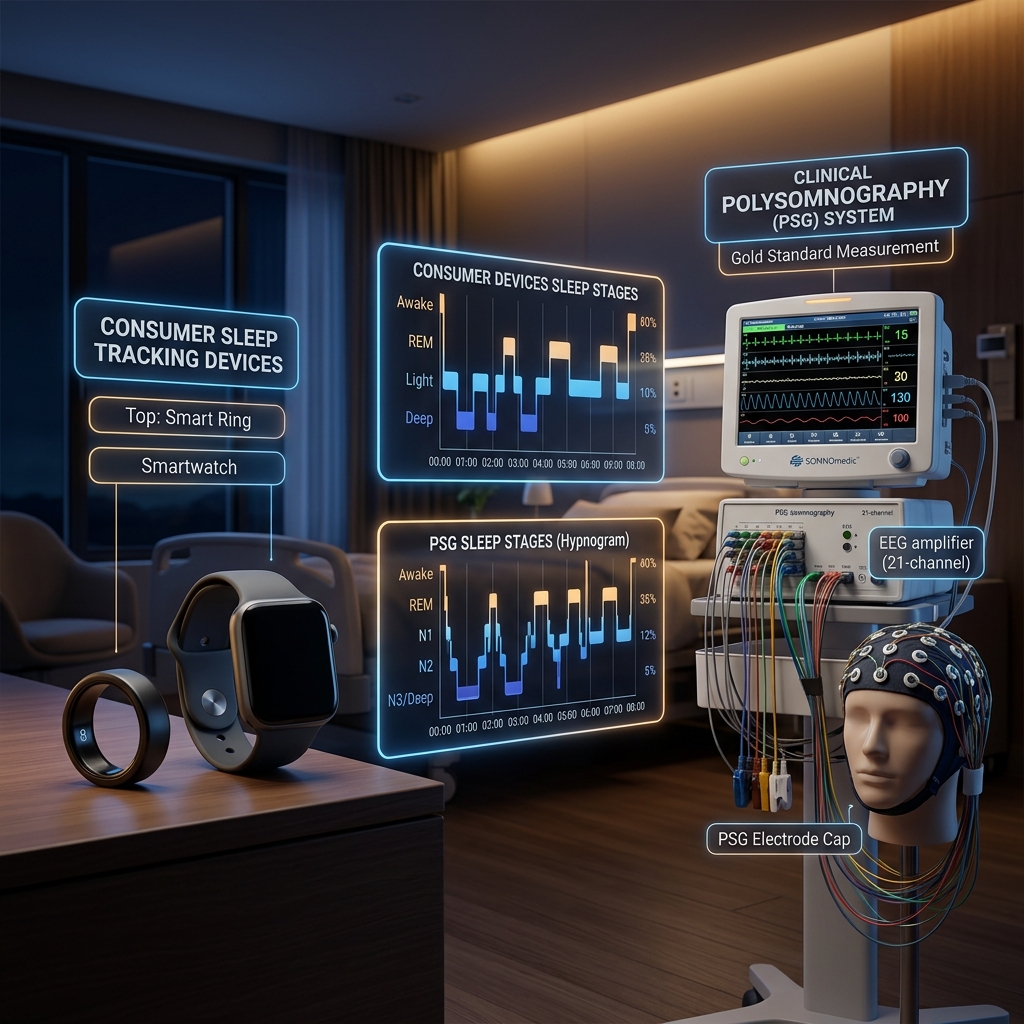
- Melatonin suppression timing: Evening blue light delays melatonin onset by 60–90 minutes, fragmenting sleep architecture and reducing restorative slow-wave sleep.
- BDNF expression: Regular circadian alignment increases brain-derived neurotrophic factor, supporting neuroplasticity and cognitive function.
Evening Light: The Hidden Disruptor
A 2023 study in PNAS demonstrated that exposure to bright light (>100 lux) between 12:00 AM and 6:00 AM doubled the risk of depressive symptoms compared to nighttime darkness. Even moderate evening light from screens (30–50 lux at the retina) suppresses melatonin by approximately 50%.
The impact goes beyond sleep. Evening light exposure alters the expression of clock genes (PER2, CRY1, BMAL1) in peripheral tissues, disrupting metabolic timing and inflammatory regulation. This creates a cascade effect where immune function, glucose metabolism, and emotional processing are all compromised.
Seasonal Considerations
For the estimated 10 million Americans affected by Seasonal Affective Disorder (SAD), light timing becomes even more critical. During winter months, the shortened photoperiod delays the circadian phase, creating a mismatch between the internal clock and social schedules. Light therapy boxes delivering 10,000 lux of full-spectrum light for 20–30 minutes each morning have demonstrated efficacy comparable to SSRIs in multiple randomized controlled trials.
Practical Guidelines for Circadian Light Hygiene
Morning (within 60 minutes of waking):
- Get 10–30 minutes of outdoor light, even on cloudy days (outdoor overcast: ~10,000 lux vs. indoor lighting: ~500 lux)
- If outdoor access is limited, use a 10,000-lux light therapy lamp at arm's length
- Face the light source indirectly — you don't need to stare at it
Daytime:
- Maximize exposure to bright, natural light during work hours
- Position desks near windows when possible
- Take outdoor breaks, especially between 10 AM and 2 PM
Evening (2–3 hours before bed):
- Dim overhead lights and switch to warm-toned (<3000K) lighting
- Use blue-light-filtering modes on all screens (Night Shift, f.lux)
- Avoid bright bathroom lights during nighttime routines — consider amber nightlights
Night:
- Sleep in complete darkness or use a sleep mask
- If you need a nightlight, use red or amber wavelengths (>600 nm) that minimally affect melatonin
The Bottom Line
Light is the most powerful zeitgeber — time-giver — for your circadian system. By aligning your light exposure with your biology, you're not just improving sleep; you're supporting the entire cascade of physiological processes that underpin mental health, from neurotransmitter production to immune regulation. The evidence is clear: when it comes to light and mental health, timing matters more than you think.