The Deep Sleep Problem
Most sleep advice focuses on duration. Eight hours. Seven minimum. But sleep researchers have known for decades that the architecture of sleep matters more than the total number.
Deep sleep — technically called slow-wave sleep (SWS) or N3 — is the stage where the most critical restoration happens. And it's the stage most vulnerable to disruption from alcohol, stress, aging, and screen exposure.
The average adult gets 1-2 hours of deep sleep per night. Below 45 minutes, measurable cognitive and immune impairment begins. By age 50, most people have lost 60-70% of the deep sleep they had at 25.
What Happens During Deep Sleep
Glymphatic Clearance
In 2012, researchers at the University of Rochester discovered the glymphatic system — a waste clearance pathway that operates primarily during deep sleep. During SWS, glial cells shrink by ~60%, opening channels that flush metabolic waste from the brain, including beta-amyloid, the protein implicated in Alzheimer's disease.
A 2019 study in Science confirmed that slow-wave sleep generates the largest waves of cerebrospinal fluid flow, directly linking deep sleep quality to brain waste clearance efficiency.
Memory Consolidation
Deep sleep is when the hippocampus replays the day's experiences and transfers them to long-term storage in the neocortex. This process — called systems consolidation — requires the slow oscillations (0.5-1 Hz) characteristic of N3 sleep.
Disrupting deep sleep while preserving total sleep time impairs memory consolidation. A 2013 study in Nature Neuroscience showed that targeted disruption of slow-wave activity in young adults produced memory performance similar to older adults.
Immune Function
Growth hormone release peaks during the first bout of deep sleep. Cytokine production — critical for immune surveillance — is concentrated in SWS. A single night of reduced deep sleep decreases natural killer cell activity by 70%.
Nervous System Recovery
Heart rate drops to its lowest point. Blood pressure decreases. HRV reaches its nightly peak. The parasympathetic nervous system dominates. This is when your autonomic nervous system resets.
What Destroys Deep Sleep
| Factor | Effect on Deep Sleep | Mechanism |
|---|---|---|
| Alcohol | Reduces SWS by 20-40% | Suppresses slow oscillations, fragments sleep |
| Caffeine after 2pm | Delays and reduces SWS | Adenosine receptor blockade persists 6-8 hours |
| Late exercise (< 2hrs before bed) | Delays SWS onset | Elevated core temperature, cortisol |
| Screen light | Shifts SWS timing | Melatonin suppression delays sleep onset |
| Ambient temperature > 20°C | Reduces SWS duration | Core temperature must drop for SWS entry |
| Aging | Progressive SWS decline | Neuronal loss in ventrolateral preoptic area |
How to Protect and Increase Deep Sleep
Temperature is the strongest lever. Your core body temperature needs to drop 1-2°F for deep sleep to initiate. A cool room (18-19°C), warm shower before bed (causes reactive cooling), or cooling mattress pad can increase SWS by 15-20%.
Consistent wake time — more important than consistent bedtime — stabilizes your circadian rhythm and concentrates deep sleep in the first third of the night, where it naturally occurs.
Resistance training — the single most effective behavioral intervention. A 2018 study found that adults who performed resistance exercise 3x/week had 25% more deep sleep than controls.
Magnesium glycinate — 200-400mg before bed. Magnesium is a GABA agonist that promotes slow-wave activity. A 2012 RCT in the Journal of Research in Medical Sciences found improved sleep quality and increased SWS duration in older adults supplementing magnesium.
Avoid alcohol. There is no dose of alcohol that improves deep sleep. Even moderate drinking (1-2 drinks) reduces SWS and fragments the second half of the night.
Tracking Deep Sleep
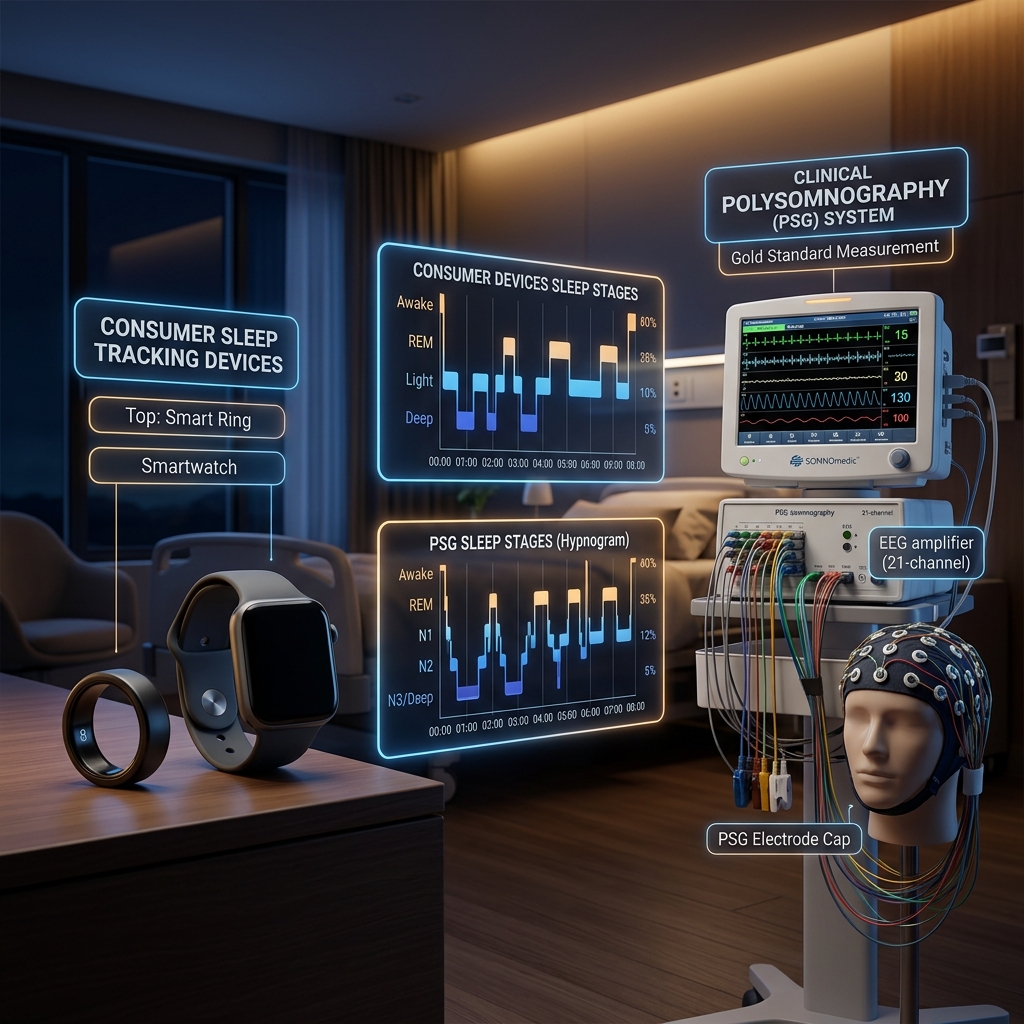
Consumer wearables (Oura, WHOOP, Apple Watch) estimate deep sleep using accelerometry and heart rate. Their accuracy varies:
- Oura Ring Gen3 — ~80% agreement with polysomnography for SWS detection
- WHOOP 4.0 — strong sleep staging accuracy validated in clinical studies
- Apple Watch — reasonable estimates but less validated
Use wearable data for trends over weeks, not individual nights. If your 30-day average deep sleep is declining, that's a signal worth investigating.
The Priority Shift
Sleep duration matters. But if you're getting 7-8 hours and still feeling unrested, the issue is almost certainly deep sleep quality. Prioritize temperature, consistency, resistance training, and alcohol avoidance. Your deep sleep will improve within weeks — and you'll feel it.
Watch: Matt Walker — Why Deep Sleep Is Your Brain's Superpower
Sleep scientist Matt Walker explains what happens during deep NREM sleep — how slow-wave oscillations transfer memories from hippocampus to cortex, clear metabolic waste via the glymphatic system, and reset emotional reactivity.