The Textbook Got It Half Right
In 1915, Walter Bradford Cannon published the work that would define how we think about stress for the next century. He described a pattern he observed in animals under threat: the body mobilizes. Heart rate spikes. Adrenaline floods the bloodstream. Blood rushes to the muscles. The animal either fights the threat or runs from it.
Cannon called this the "fight or flight" response. The phrase entered the English language and stayed there, becoming one of the few pieces of neuroscience that every person on the planet seems to know.
The problem is that it's incomplete. Dangerously so.
Because when the threat is big enough — or inescapable enough, or early enough in life — the body doesn't fight or flee. It does something else entirely.
The Four Responses
Modern trauma research has expanded Cannon's model to include four primary stress responses. They aren't choices. They're automatic patterns, selected by the nervous system in milliseconds, based on the brain's unconscious assessment of what will maximize survival.
Fight
The fight response is mobilization toward the threat. Jaw clenches. Fists tighten. Anger surges. The body prepares to confront.
In daily life, fight shows up as irritability, argumentativeness, the urge to control, chronic frustration, passive aggression, and road rage. The nervous system is saying: I need to push back against something.
People stuck in a fight response often look "difficult." They're not. They're threatened.
Flight
The flight response is mobilization away from the threat. Heart rate climbs. Legs want to move. The body prepares to escape.
In modern life, you can't always run. So flight translates into workaholism, over-exercising, perfectionism, obsessive planning, restlessness, and the inability to sit still. The nervous system is saying: I need to get away from something.
Anxiety is often a flight response that has no physical outlet.
Freeze
Here's where Cannon's model breaks down. Freeze is not a failure of the fight-or-flight system. It's a separate, evolutionarily ancient response — older than fight or flight — mediated by the dorsal vagal complex.
When the nervous system determines that neither fighting nor fleeing will work — the threat is too large, too fast, or too inescapable — it immobilizes. Heart rate drops. Muscles lock. Dissociation sets in. The body goes still.
In animals, this is "playing dead." The mouse caught by the cat goes limp. The opossum collapses. The evolutionary logic is straightforward: some predators lose interest in prey that stops moving.
In humans, freeze manifests as numbness, dissociation, brain fog, the inability to think clearly under pressure, the feeling of being "stuck," and the frustrating experience of knowing what you should do but being unable to do it.
Trauma survivors often describe freeze as the worst response — not because it hurts the most, but because it comes with shame. Why didn't I fight back? Why didn't I run? The answer is that their nervous system chose the option most likely to keep them alive. It wasn't a decision. It was biology.
Fawn
The fourth response was identified by therapist Pete Walker and is increasingly recognized in trauma literature. Fawn is the impulse to appease the source of threat — to make yourself agreeable, useful, invisible, or indispensable in order to avoid harm.
Fawn shows up as people-pleasing, difficulty saying no, chronic self-sacrifice, over-accommodation, and the inability to identify your own needs. It's the response that develops when the threat comes from someone you depend on — a parent, a partner, an authority figure. You can't fight them, you can't flee from them, and freezing doesn't help. So you learn to manage their emotional state to keep yourself safe.
Fawn is the stress response most often mistaken for personality. "She's just a people-pleaser." "He's so agreeable." These are often descriptions of a nervous system in fawn mode.
The One Nobody Talks About: The Ventral Vagal State
The four stress responses — fight, flight, freeze, fawn — are all defensive states. They exist to keep you alive. But there's a fifth state that isn't a stress response at all.
Stephen Porges' polyvagal theory describes the ventral vagal state — the social engagement system. This is the nervous system state associated with safety, connection, curiosity, and play. Your face is expressive. Your voice has warmth. You can listen, reflect, be present.
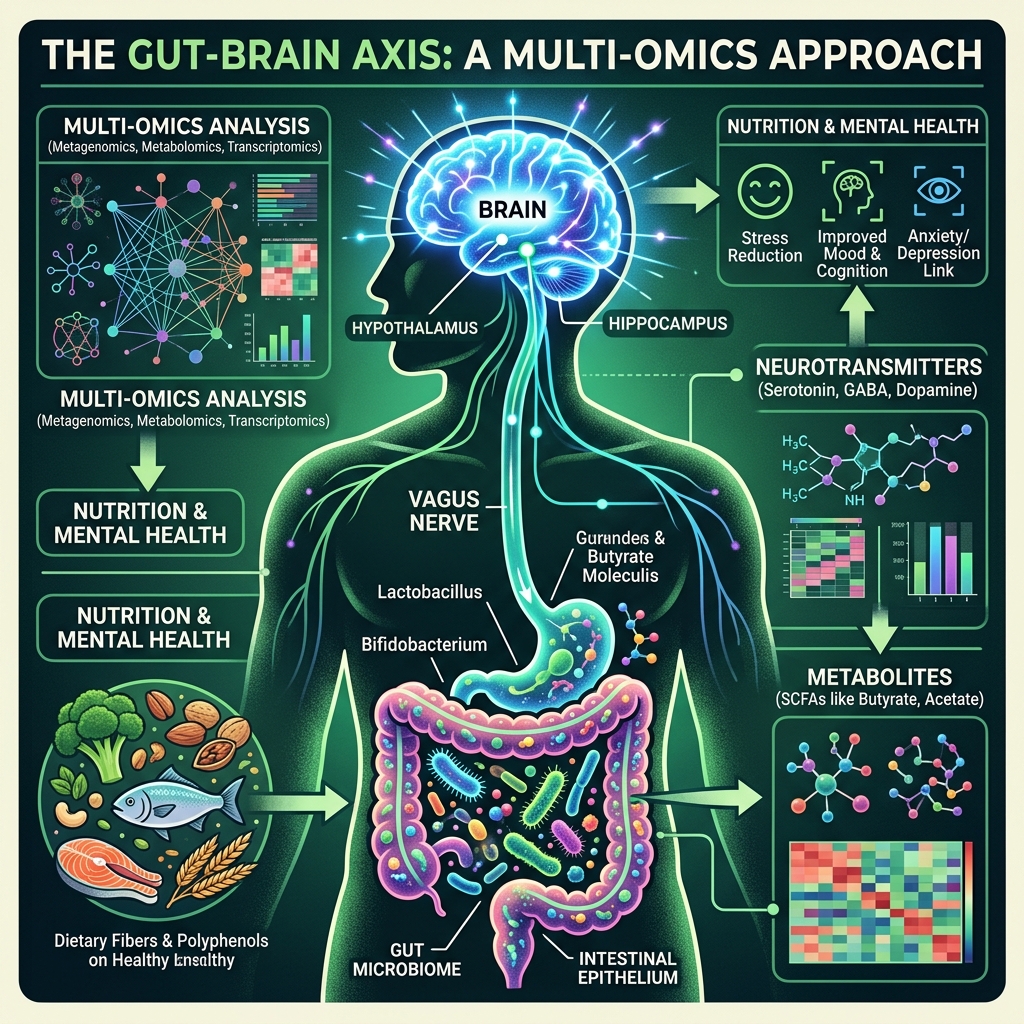
This isn't just "being calm." It's a specific physiological state mediated by the newest branch of the vagus nerve. In ventral vagal, your heart rate is flexible (high HRV), your immune system functions well, your digestion works, and your prefrontal cortex — the part of the brain responsible for planning, empathy, and impulse control — is fully online.
The ventral vagal state is where healing happens. Not because it's a treatment, but because it's the physiological condition in which the body can repair itself.
The goal of nervous system regulation isn't to eliminate stress responses — they're necessary for survival. The goal is to expand your capacity to return to ventral vagal after the threat has passed. The word for this is resilience, and it's not about toughness. It's about flexibility.
Getting Stuck
The stress responses become problems when they become defaults.
A person who grew up in a chaotic household might have a nervous system calibrated to fight — always braced for conflict, always scanning for threat. A person who experienced repeated violations of their autonomy might default to fawn — automatically accommodating others' needs at the expense of their own. A person who endured overwhelming, inescapable stress might live in freeze — going through the motions of daily life while feeling numb, foggy, disconnected.
These patterns aren't personality flaws. They're the nervous system's best guess about what the world requires for survival. The guess was formed under specific conditions — and those conditions may no longer apply. But the nervous system doesn't know that. It's still running the old program.
The Path Back
Getting unstuck requires working with the body, not just the mind. You can't think your way out of a freeze response. You can't logic your way out of fawn. The thinking brain (prefrontal cortex) is downstream of the survival brain (amygdala, brainstem). When the survival brain is running the show, the thinking brain is along for the ride.
This is why body-based approaches — somatic experiencing, breathwork, movement, vagal toning — are often more effective for nervous system dysregulation than traditional talk therapy alone. They address the system where the pattern is stored.
The sequence matters:
Safety first. The nervous system needs cues of safety before it will release a defensive pattern. These cues are often relational — a warm presence, an attuned voice, predictable behavior.
Body before mind. Notice what's happening in your body. Where do you feel tension? Numbness? Heat? Cold? The body holds the map.
Titration. Don't flood the system. Work in small doses. Touch into activation, then return to safety. Each cycle expands capacity.
Completion. Many stress responses were interrupted — the person couldn't fight, couldn't flee, couldn't complete the survival action. Somatic therapies often involve allowing the body to complete these interrupted movements in a safe context.
You are not your stress response. Your stress response is a strategy your nervous system adopted to keep you alive. Understanding it is the first step. Working with it — gently, patiently, with respect for its purpose — is the path back to flexibility.
Sources: Cannon, "Bodily Changes in Pain, Hunger, Fear, and Rage," Appleton, 1915. Walker, "Complex PTSD: From Surviving to Thriving," Azure Coyote, 2013. Porges, "The Polyvagal Theory," Norton, 2011. Van der Kolk, "The Body Keeps the Score," Viking, 2014. Levine, "Waking the Tiger," North Atlantic Books, 1997.
Watch: How Your Body's Stress Response Actually Works
A physiological breakdown of the stress response — from the initial amygdala alarm through HPA axis activation, cortisol and adrenaline release, and the lesser-known freeze and fawn responses that happen when fight or flight isn't an option.