What Is the Vagus Nerve?
The word "vagus" comes from the Latin word for "wandering" — and for good reason. The vagus nerve is the longest cranial nerve in your body, stretching from your brainstem all the way down through your neck, chest, and abdomen, connecting to nearly every major organ along the way: heart, lungs, stomach, intestines, liver, spleen, and kidneys.
Technically the tenth cranial nerve (CN X), the vagus is the primary component of the parasympathetic nervous system — the "rest and digest" branch that counterbalances the sympathetic "fight or flight" response. Think of it as your body's built-in calm button: when vagal activity increases, heart rate slows, breathing deepens, digestion activates, and inflammation decreases.
The Two-Way Communication Highway
What makes the vagus nerve extraordinary is that it's bidirectional. About 80% of vagal fibers are afferent — meaning they carry information from the body to the brain. Only 20% are efferent, carrying commands from brain to body.
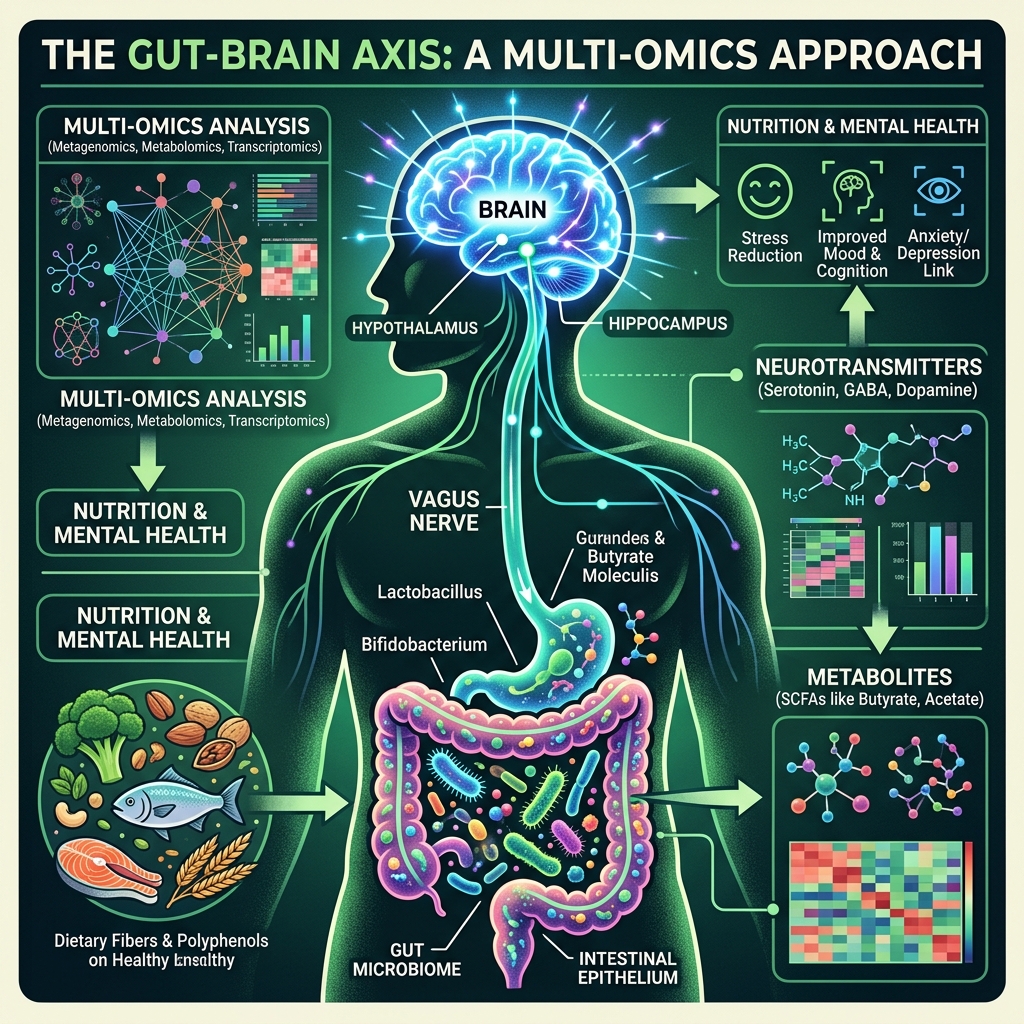
This means the vagus nerve is primarily a sensory nerve, constantly reporting on the state of your organs to the brainstem's nucleus tractus solitarius (NTS). Your brain is receiving a continuous stream of data about your gut microbiome composition, inflammatory markers, heart rhythm, lung inflation, and nutritional status — all through the vagus nerve. This is the biological basis of "gut feelings."
Vagal Tone: Your Resilience Metric
"Vagal tone" refers to the activity level of the vagus nerve, typically measured through heart rate variability (HRV) — the variation in time between consecutive heartbeats. Higher HRV indicates stronger vagal tone and greater parasympathetic influence.
Research by Dr. Stephen Porges (Polyvagal Theory) has fundamentally reshaped our understanding of the vagus nerve's role in social behavior and emotional regulation. His work identifies three hierarchical neural circuits:
- Ventral vagal complex (social engagement): The myelinated vagal pathway that supports calm social interaction, facial expression, vocalization, and listening. This is the "safe and social" state.
- Sympathetic nervous system (mobilization): The fight-or-flight response activated under perceived threat, increasing heart rate, blood pressure, and muscle tension.
- Dorsal vagal complex (immobilization): The unmyelinated vagal pathway associated with shutdown, dissociation, and freeze responses — the most primitive defense.
High vagal tone is associated with:
- Greater emotional resilience and stress recovery
- Better social engagement and empathy
- Reduced inflammation (via the cholinergic anti-inflammatory pathway)
- Improved digestion and gut health
- Lower risk of cardiovascular disease
- Better glucose regulation
The Inflammatory Reflex
One of the most significant recent discoveries is the vagus nerve's role in controlling inflammation. Neuroscientist Kevin Tracey identified the "cholinergic anti-inflammatory pathway" — a mechanism by which vagal efferent signals release acetylcholine in the spleen, suppressing the production of pro-inflammatory cytokines (TNF-α, IL-1β, IL-6).
This has profound clinical implications. Vagus nerve stimulation (VNS) devices are now FDA-approved for treatment-resistant depression and epilepsy, with emerging research in rheumatoid arthritis, inflammatory bowel disease, and sepsis. In clinical trials, implanted VNS devices have achieved significant reductions in RA disease activity scores without immunosuppressive drugs.
Evidence-Based Ways to Stimulate Your Vagus Nerve
Cold Exposure Cold water on the face or neck activates the diving reflex, a powerful vagal response that slows heart rate by 10–25%. Start with cold water face splashing, progress to cold showers (final 30–60 seconds), or try cold water immersion. A 2023 study in Biology confirmed that cold water immersion at 14°C significantly increased parasympathetic activity within minutes.
Deep, Slow Breathing Extending the exhale relative to the inhale directly stimulates the vagus nerve through mechanical stretch receptors in the lungs. The "physiological sigh" (double inhale through nose, extended exhale through mouth) has been shown by Stanford researchers to be particularly effective at reducing physiological arousal in as little as one breath cycle.
Humming, Chanting, and Singing The vagus nerve innervates the larynx and pharynx. Producing sustained vocalizations — humming "om," singing, gargling, or even just humming a tune — mechanically stimulates vagal fibers. Research shows that group singing increases HRV more than listening to music alone.
Meditation and Mindfulness Loving-kindness meditation in particular has been shown to increase vagal tone over time. A landmark study by Barbara Fredrickson demonstrated that a 6-week loving-kindness meditation program significantly increased vagal tone, which mediated improvements in positive emotions and social connections.
Exercise Regular moderate aerobic exercise (150 minutes/week) is one of the most reliable ways to improve vagal tone. HRV typically increases within 4–6 weeks of consistent training. High-intensity interval training (HIIT) may be particularly effective.
Gut Health Because of the gut-brain axis, a diverse microbiome supports vagal signaling. Probiotics (particularly Lactobacillus rhamnosus), prebiotic fiber, and fermented foods have all been shown to influence vagal tone. A 2011 study in PNAS demonstrated that L. rhamnosus reduced anxiety-like behavior in mice — but only when the vagus nerve was intact.
Omega-3 Fatty Acids EPA and DHA from fish oil or algae supplements support vagal function. A meta-analysis found that omega-3 supplementation significantly increased HRV, with higher doses showing greater effects.
Consumer Devices for Vagal Stimulation
A growing market of non-invasive vagus nerve stimulation (nVNS) devices targets the auricular branch of the vagus nerve in the ear:
- Transcutaneous VNS (tVNS) devices deliver mild electrical stimulation to the tragus or cymba conchae of the ear
- Apollo Neuro uses gentle vibration patterns to shift autonomic balance
- Pulsetto and Xen by Neuvana target the vagus nerve through the ear
While these devices show promise, the evidence base is still developing. Natural methods (breathing, cold exposure, exercise) remain the most well-validated approaches.
The Bottom Line
The vagus nerve isn't just another anatomical structure — it's the primary communication channel between your body and brain, the master regulator of your stress response, and a key controller of inflammation. Understanding and strengthening vagal tone through evidence-based practices gives you direct access to your parasympathetic nervous system — your body's built-in pathway to calm, recovery, and resilience.