The Discovery Nobody Talked About
In 1921, a German physiologist named Otto Loewi woke up in the middle of the night with an idea. He scribbled it on a piece of paper and went back to sleep. The next morning, he couldn't read his own handwriting.
The following night, the idea came back. This time, he went straight to his laboratory at 3 a.m. and ran the experiment.
He took two frog hearts — one still connected to its vagus nerve, one severed from it. He stimulated the vagus nerve on the first heart, and it slowed down. Then he took the fluid surrounding that first heart and dripped it onto the second one. That heart slowed down too.
Something had been released. A chemical messenger. Loewi had just discovered neurotransmission — the way nerves talk to the rest of the body. He won the Nobel Prize for it. And the nerve that made it all possible was the vagus.
A century later, most people have never heard of it.
The Longest Nerve You'll Never See
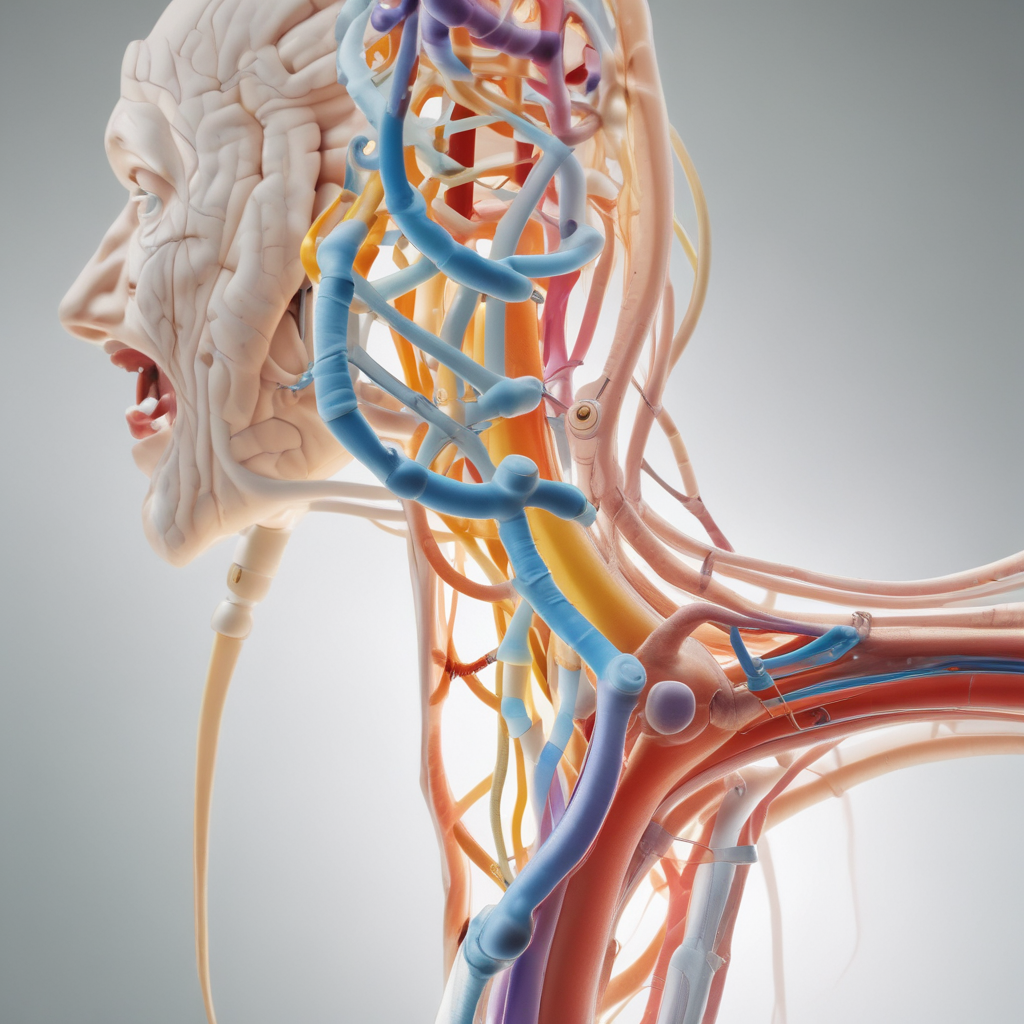
The word vagus comes from the Latin for "wandering" — the same root as vagrant and vagabond. It earned the name honestly. The vagus nerve is the longest cranial nerve in your body, running from your brainstem all the way down to your abdomen, branching off to touch your heart, lungs, stomach, liver, spleen, kidneys, and intestines along the way.
If the sympathetic nervous system is the accelerator — the one that spikes your heart rate when a car swerves into your lane — the vagus is the brake. It's the primary nerve of the parasympathetic system, the branch responsible for calming you down, digesting your food, and repairing your body.
But calling it "the brake" understates the case. The vagus nerve is more like the body's chief operations officer. It influences:
- Your heart — it sets your resting heart rate through the sinoatrial node
- Your gut — it stimulates the muscular contractions that move food through your digestive tract
- Your immune system — it modulates inflammatory responses through a pathway called the cholinergic anti-inflammatory reflex
- Your voice — it innervates the muscles of your larynx and pharynx
- Your mood — it sends signals from your gut to your brain that influence anxiety, depression, and emotional regulation
Here's what makes it extraordinary: about 80% of the vagus nerve's fibers are afferent — meaning they carry information upward, from body to brain. Your gut, your heart, your lungs — they're all filing reports to your brain through this single nerve, all day, every day. Your body is talking to your brain more than your brain is talking to your body.
When people talk about "gut feelings" or "listening to your body," they're describing the vagus nerve. They just don't know it.
The Fitness Metric No One Checks
In the early 2000s, a researcher named Stephen Porges introduced something he called polyvagal theory — a framework for understanding how the vagus nerve shapes our social behavior, our responses to threat, and our capacity for connection. The theory remains debated in academic circles, but one thing it highlighted has proven broadly useful: the concept of vagal tone.
Vagal tone is essentially the fitness level of your vagus nerve. High vagal tone means your body is good at switching between states — from alert and focused to calm and relaxed. Low vagal tone means you're stuck. Your nervous system is either chronically revved up or chronically shut down, with little ability to modulate between the two.
You can measure vagal tone indirectly through heart rate variability (HRV) — the variation in time between your heartbeats. A healthy heart doesn't beat like a metronome. It speeds up slightly when you inhale and slows down when you exhale. The greater this variation, the higher your vagal tone.
Research consistently links high vagal tone to:
- Lower resting heart rate
- Better emotional regulation
- Reduced inflammation
- Improved digestion
- Greater resilience to stress
- Even longer lifespan
Low vagal tone, meanwhile, is associated with depression, anxiety disorders, chronic inflammation, IBS, and cardiovascular disease.
The uncomfortable truth is that most people in modern life have mediocre vagal tone. Chronic stress, poor sleep, sedentary lifestyles, and constant digital stimulation all depress it. But the encouraging news is that vagal tone appears to be trainable.
Six Ways to Strengthen Your Vagus Nerve
The research on vagal stimulation has exploded in the last decade. Here's what actually has evidence behind it:
1. Slow breathing — the single most accessible tool
Breathing at roughly 6 breaths per minute (about 5 seconds in, 5 seconds out) consistently produces the strongest vagal activation in clinical studies. At this rate, your breathing rhythm synchronizes with a natural oscillation in your blood pressure called the Mayer wave. When these two rhythms align, your HRV hits its peak.
The beauty of this approach is its simplicity. You can do it anywhere, it costs nothing, and the effects are measurable within minutes.
2. Cold exposure — brief, controlled discomfort
When cold water hits your face, it triggers the mammalian diving reflex — an ancient response that slows your heart rate and redirects blood to your core organs. This reflex is mediated by the vagus nerve.
A 2000 study by Šrámek et al. found that immersion in 57°F (14°C) water produced a 200-300% increase in norepinephrine — the chemical that sharpens focus and elevates mood. More recent systematic reviews suggest that regular cold exposure may improve vagal tone over time, though the evidence base is still developing.
Start with 30 seconds of cold at the end of your shower. The benefit comes from the discomfort, not the temperature.
3. Humming and singing
This one surprises people. The vagus nerve innervates the muscles of your larynx and pharynx — the muscles you use to produce sound. Sustained humming, chanting, or singing creates vibrations that physically stimulate these vagal fibers.
A small but intriguing 2011 study published in the British Medical Journal found that hymn singing produced significant increases in HRV compared to normal speech. The researchers attributed this to the long, structured exhales that singing naturally produces.
4. Gargling
Same principle as humming. Vigorous gargling contracts the muscles at the back of your throat, activating the pharyngeal branch of the vagus nerve. It's not elegant, but it works. Some functional neurologists recommend gargling until your eyes water as a daily vagal exercise.
5. Meditation — particularly loving-kindness practices
A 2013 study by Bethany Kok and Barbara Fredrickson at the University of North Carolina found that loving-kindness meditation — the practice of directing feelings of warmth and goodwill toward yourself and others — significantly increased vagal tone over a 9-week period. Participants who started with higher vagal tone also showed greater increases in positive emotions, creating what the researchers called an "upward spiral."
6. Physical exercise
Regular aerobic exercise improves vagal tone. This is well-established. What's less obvious is that gentle movement — walking, yoga, tai chi — may be particularly effective for people whose nervous systems are already overstimulated. High-intensity training is powerful, but for someone stuck in chronic sympathetic activation, a 30-minute walk might be more therapeutic than a CrossFit workout.
The Clinical Frontier
In 1997, the FDA approved the first vagus nerve stimulation (VNS) device for treatment-resistant epilepsy. Surgeons implanted a small generator under the patient's collarbone, connected to the vagus nerve by a thin wire. The device sent regular electrical pulses to the nerve, and seizure frequency dropped significantly.
In 2005, VNS was approved for treatment-resistant depression. Since then, researchers have explored its potential for migraine, anxiety, PTSD, inflammatory bowel disease, rheumatoid arthritis, and even Alzheimer's.
More recently, non-invasive devices have entered the market. Companies like gammaCore, Pulsetto, and Truvaga sell transcutaneous vagus nerve stimulators — devices you hold against your neck or clip to your ear. The research is promising but still early. Some studies show significant effects; others show little difference from placebo.
What's clear is that the vagus nerve sits at the intersection of nearly every system in your body. It connects your brain to your gut, your immune system to your emotions, your breathing to your heart rate. Understanding it doesn't just explain how your body works — it gives you a handle to start changing it.
Otto Loewi couldn't read his own handwriting that first night. But the discovery he made — that nerves communicate through chemistry, that the body's systems are wired together in ways we're still unraveling — has only grown more relevant. A century later, the wandering nerve is finally getting the attention it deserves.
Sources: Loewi, "Über humorale Übertragbarkeit der Herznervenwirkung," Pflügers Archiv, 1921. Breit et al., "Vagus Nerve as Modulator of the Brain-Gut Axis," Frontiers in Psychiatry, 2018. Kok & Fredrickson, "Upward Spirals of the Heart," Psychological Science, 2013. Šrámek et al., European Journal of Applied Physiology, 2000.